What Does Quality Control Actually Look Like Inside an AI-Native Agency?
QC for AI-generated work isn't proofreading. It's a production system with competing drafts, independent scoring, blind judging, and automated fact-checking that runs whether you're awake or not. Most agencies don't have one because they've never shipped enough AI-generated work to learn what breaks.
If you've shipped something at 2am and the client caught the typo before you did, you already know what I'm about to say. Your eyes are not a quality system. They never were. They just happened to be enough when output volume was low.
AI changed the volume equation. The machine can produce fifty pieces in the time a human makes three. And now your eyes are the bottleneck for fifty items instead of three. The review step that felt manageable becomes the failure point. Not because you got lazier. Because the math got worse.
Most agencies responding to this by saying "we have a review process" are describing a person reading the thing before it ships. That's not QC. That's a last-ditch hope that one set of tired eyes catches what the machine missed.
Here's what real QC looks like when you're running dozens of AI-generated deliverables through a production system every week.
Why Doesn't "Reading It Before It Ships" Catch AI Errors?
I learned this one the hard way.
We had a client deliverable, a PDF report, go out with grammar errors in it. Multiple. Client flagged them. Not one person in our pipeline caught it because it went through single-pass generation and straight to the client. The AI produced it. Somebody glanced at it. It shipped.
That was the last time we shipped anything through a single-pass review.
The problem isn't that AI makes mistakes. Everything makes mistakes. And when those errors reach the client, the damage isn't just the error itself — it's what happens to the relationship. But what makes AI errors uniquely dangerous is that they don't look like mistakes. They read fluently. The formatting is clean. Your brain skips right over the error because the surrounding context feels professional. A human making the same mistake would have produced an awkward sentence your eye would have snagged on. AI produces smooth, confident wrongness.
When you're running one or two pieces of content a week, you can brute-force this with careful reading. When you're running fifty-one posts through a production pipeline, you can't. The volume makes the "just read it" approach a coin flip.
What Does a Real AI Quality Control System Actually Include?
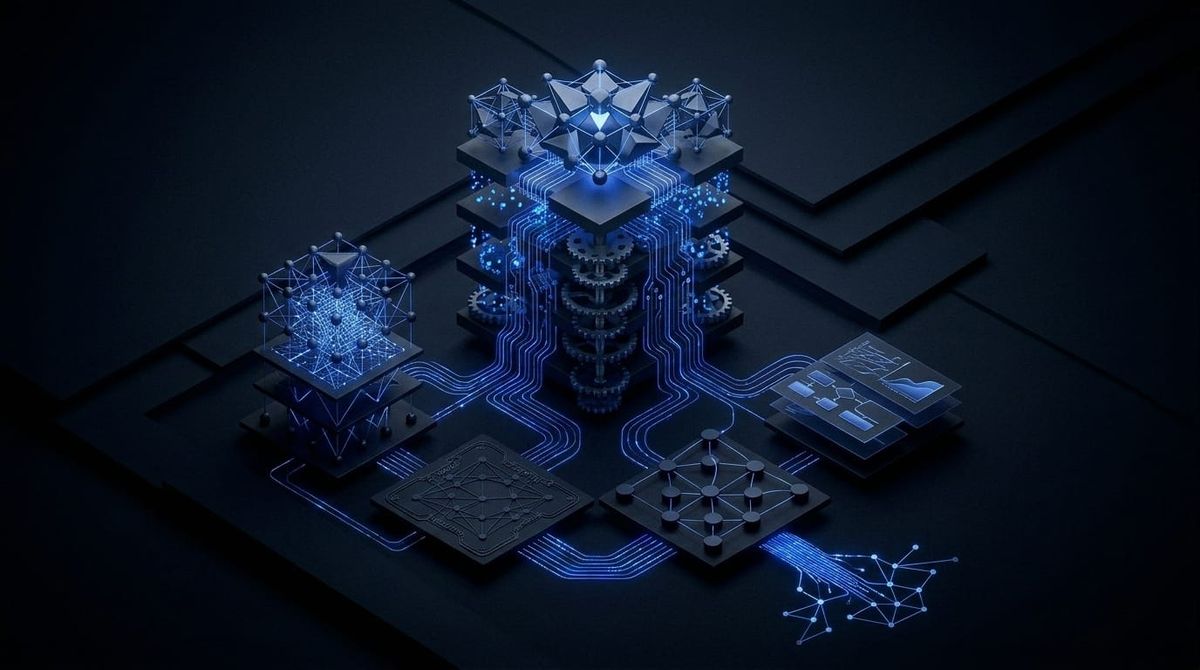
Ours has layers. Each one exists because something specific broke and we built the catch.
Layer 1: Competing drafts, not solo drafts.
We don't generate one version and review it. For any high-stakes piece, the system produces five complete drafts simultaneously. Each one is written from a different copywriting philosophy. Different structure. Different angle. Different persuasion architecture.
This came from a specific failure. Version one of a $1,497 sales page was hand-written in one pass. My same-day read: the design was good, but the persuasion wasn't enticing enough. The bullets were weak. One-shot copy reads fine. It just sells flat.
So we rebuilt the process. Five complete drafts, written simultaneously by five different approaches, scored by three independent quality reviewers, judged blind, and assembled into a hybrid stronger than any single draft. About an hour of wall-clock time. I was doing other work while it ran.
The one-pass version looked professional. The five-way version converted. That's the difference between proofreading and production QC.
Layer 2: Independent scoring, not opinion.
Each of the three quality reviewers scores against a fixed rubric. They don't know what the other reviewers scored. They don't know which draft is "the favorite." The scoring is blind.
This matters because the most dangerous QC failure isn't catching typos. It's anchoring bias. When one person reviews one draft, the first read feels good because there's nothing to compare it to. They fix the obvious errors and ship. The overall weakness goes unnoticed because there's no contrast.
Three independent scores surface patterns a single reviewer can't see. One reviewer rates the headline high while two rate it low. That disagreement is the signal. The final version keeps what all three agree on and replaces what they don't.
Layer 3: Automated fact-checking against source data.
Every claim in a deliverable gets checked against the actual data it references. Not by a human reading it and nodding. By a verification system that traces the claim to its source and flags anything that doesn't match.
We run a content engine that publishes blog posts every night at 9pm. Every post goes through a two-stage quality gate: a content review that scores against a minimum threshold (posts below 70 out of 100 get killed), and a fact-checker that verifies every claim against real data. Posts that fail get killed. The night produces nothing rather than shipping sub-standard work.
Fifty-one posts shipped through that system. Forty out of fifty-four indexed. Seventy-four percent index rate. That doesn't happen if you're shipping unverified content and hoping Google likes it.
Layer 4: The system catches its own infrastructure failures.
QC isn't just about content quality. It's about whether the system itself is working. A power outage killed five of our background processes once. The health monitor catches dead jobs, dying services, and silent failures every morning and reports what broke. Same day it came online, it found a backup that had been silently failing for forty-five days. Fixed it before anyone knew there was a problem.
If your quality system can't tell you that it itself is broken, it's not a quality system. It's a prayer.
Can You Shortcut Building an AI Quality System?
Every layer I just described exists because something specific went wrong. The competing-drafts layer exists because a one-pass sales page was weak and the owner caught it in seconds. The fact-checking layer exists because a client PDF shipped with grammar errors. The self-monitoring layer exists because a power outage silently killed processes nobody was watching.
You could read this post and try to build each layer from scratch. But the real value isn't the layers themselves. It's the accumulated knowledge encoded inside them. Every failure teaches the system a new rule. Every rule makes the next run cleaner. This is also why most agency AI projects never make it past the pilot — they build the first layer and stop before the system learns enough to be reliable. After fifty-one posts, dozens of ad creatives, enterprise deliverables, sales pages, and email sequences, the system knows what breaks. Yours doesn't yet.
That's the compound advantage of an owned machine versus rented tools. ChatGPT doesn't remember what went wrong on your last campaign. It doesn't carry forward the lesson from the time you shipped a page with broken images and burned a hundred dollars on forty-four blank sessions before anyone checked.
Your machine remembers. You can't be undercut on what you own. The tool vendor can drop their price to zero and the person renting it still has to learn every lesson you've already paid for.
What Do Most Agencies Get Wrong About AI Quality Control?
The advice on this topic is mostly from people who haven't shipped at volume. "Implement human-in-the-loop workflows." "Establish governance frameworks." "Create review checkpoints."
All true. All useless without the game tape.
A governance framework tells you to have quality gates. It doesn't tell you that a page returning a 200 status code can still have nine broken images and a dead video. It doesn't tell you that a delivery integration can silently die for nine days while every dashboard shows green. It doesn't tell you that AI copy produces smooth, confident wrongness that a single reviewer will miss most of the time.
Those lessons come from shipping. The governance framework is the table of contents. The game tape is the book.
We've shipped dozens of AI-generated pieces through this system — blog posts, ad creatives, sales pages, enterprise deliverables, email sequences. We've caught errors that would have ended client relationships. We've had errors we didn't catch in time and built the rule that prevents the next one. Without those layers, your agency's AI output will feel generic — not because the AI can't do better, but because nothing in the pipeline pushed it to. That compounding is the quality system. The layers are the container.
How Do You Tell If an Agency Has Real AI Quality Control?
Here's what I'd tell anyone shopping for an agency right now. Ask them how many AI-generated deliverables they've shipped through a production quality system. Not "how many things has AI helped with." How many went through competing drafts, independent scoring, automated fact-checking, and outcome monitoring.
If the answer is vague, you're looking at an agency that proofreads AI output. That works until it doesn't. And when it doesn't, you're the one who finds the error.
If the answer has receipts, fifty-one posts through a two-stage gate with a 74% index rate, a sales page that drafted itself five ways and kept the best of each, a self-healing infrastructure that catches its own failures before morning, you're looking at a machine that compounds on your data. Every month it runs, it gets harder to replace.
That's the difference between renting AI tools and owning a production system. One gives you speed. The other gives you speed that gets smarter.
Frequently Asked Questions
What does quality control for AI-generated work actually involve?
Real QC for AI work means competing multiple drafts against each other (not reviewing a single output), scoring them with independent reviewers against fixed rubrics, running automated fact-checks against source data, and monitoring whether the production system itself is healthy. Proofreading is one step. It's not the system.
How do you prevent AI from producing errors in client deliverables?
You don't prevent errors. You build layers that catch them before they ship. Competing drafts surface weak approaches. Independent scoring catches anchoring bias. Automated fact-checking flags unverified claims. And a self-monitoring layer catches infrastructure failures that would otherwise go silent for days or weeks.
Why do most agencies struggle with AI quality control?
Because they haven't shipped enough AI-generated work at volume to learn what breaks. QC lessons come from specific failures, not from frameworks. An agency that's shipped fifty-plus pieces through a production system has learned things about AI error patterns that no governance document can teach.
Can you just have a human review AI output?
You can, and it will catch some errors. But human review of AI output has a specific failure mode: AI-generated content reads fluently even when it's wrong, which means a single reviewer anchored on one draft will miss errors that competing drafts and independent scoring would surface. One layer of review is better than none. It's not a system.
What's the difference between an AI tool's built-in quality checks and a production QC system?
A tool's built-in checks tell you whether the tool ran correctly. A production QC system tells you whether the output is actually good for your client. Those are different questions. A page can return a 200 status code and still have broken images. A workflow can fire successfully and still deliver the wrong result. Production QC watches outcomes, not processes.
I document how a real agency runs on an AI system — real spend, real numbers, every week. If that's the kind of behind-the-curtain look you want, get it by email.