What Does 'Service-as-a-Software' Actually Mean for Agencies?
Service-as-a-Software means you still deliver the service — the strategy, the creative, the campaigns — but the execution runs through software you own, not people you manage. The client pays for outcomes. The machine does the production. Your margin shifts from the traditional 45–55% to north of 60% because the work that used to require five juniors now runs overnight while you sleep.
The term is everywhere right now. Berkeley published a paper on it. VCs are using it in pitch decks. Jakob Nielsen called it the new SaaS and predicted a $50 trillion market in 20 years.
And if you're running a small agency doing $10K, $20K, $30K a month — you're probably reading those numbers and thinking, what does any of this have to do with me?
Fair question. Because the way the term gets used in the VC world and the way it works inside an actual agency operation are two different conversations.
I run one. Here's what it actually looks like.
What does Service-as-a-Software look like from inside an agency?
Berkeley's definition — "the encoding of domain judgment into autonomous systems that deliver outcomes directly, with humans supervising rather than executing" — sounds like a consulting paper. It is one.
But strip the jargon and it's the simplest idea in business: instead of hiring people to do the work, you build the machine that does it and keep the margin.
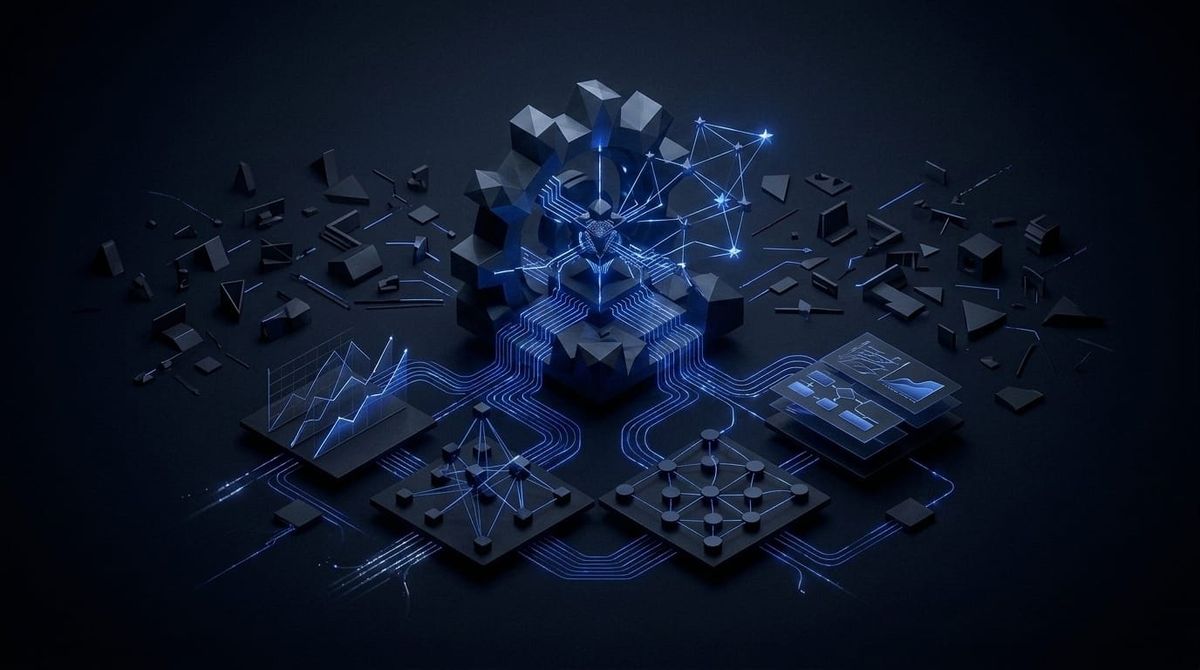
In our shop, the machine reads every ad account, every CRM conversation, every client comment, and every performance number — every morning, before I'm awake. It writes the daily brief. It flags what needs attention. It produces the creative, drafts the reports, runs the quality checks. When it finishes, I wake up to decisions, not data.
That's Service-as-a-Software. Not a dashboard bolted onto a retainer. Not a white-labeled AI tool you resell. The actual work — the production, the analysis, the execution — running through software you built, you own, and you control.
Why isn't this just "productized services" with a new label?
Because productized services still scale on people. You define the scope, package the price, and then hire more juniors to deliver at volume. The margin stays roughly the same because headcount tracks revenue.
Service-as-a-Software inverts that. The machine handles production. Headcount stays flat while delivery scales. Your gross margin shifts from the traditional 45–55% into the 55–70% range because the cost of delivery drops every time the system gets smarter — and it gets smarter every week it runs.
This is the same distinction that separates an AI-native agency from one that just uses AI tools. Bolting a subscription onto your existing process doesn't change the model. Rebuilding the delivery layer around owned software does.
Three tests tell you which one you're actually running:
- Repeatability: Can you onboard the next client using the same workflow — changing the inputs, not rebuilding the process?
- Observability: Can the client see what ran, when, and what it produced — without waiting for your Friday email?
- Compounding: Does delivery get cheaper at the margin as your library grows — or does every engagement reset to zero?
If any of those answers is no, you have a productized service. Not the same thing.
What changes when the machine does the work?
The numbers change. Here's how they changed in ours.
We spent $17.76 on a retargeting campaign running against a 20-person audience. Three days later: two sales, $108 in revenue, $8.88 cost per acquisition — roughly seven times below break-even. The system set the rules, monitored the results, and surfaced the decisions.
Separately, a cold ad hit $3.02 in spend with 40 impressions and zero clicks — killed the same day. That's the speed: the system flags the losers before they burn anything meaningful, and you make the call in seconds instead of waiting for a Friday report.
That speed — the same-day kill, the overnight creative production, the morning intelligence brief — is what Service-as-a-Software actually delivers. Not "AI-augmented service." Not "we use AI tools." The machine IS the delivery layer. And we've covered the AI tools marketing agencies actually use — but the tools are the commodity layer. They're what you rent. The machine you build on top of them is what you own.
And the deal structure follows. When your delivery cost drops, the way you price changes too. You stop selling hours. You sell outcomes. You price on value, not on time. The $5K retainer doesn't disappear — but the margin on that $5K shifts from $2,000 to $3,500 because the machine produced in an evening what used to take a week.
The real moat: you own the machine
Here's where the VC definition and the operator reality converge.
The big firms see it. McKinsey and AWS launched a joint venture around outcome-based pricing. Accenture committed $3 billion to AI investments. But they kept the billable-hour delivery model. Recognition without resolution — Berkeley's term for the pattern.
For a small agency, the opportunity is cleaner: you don't have the legacy to protect. You can build the machine from scratch — and once you do, you own it. The data. The workflows. The encoded judgment. Every month the machine runs a client's account, it learns that business better than any cheaper vendor ever could.
Any agency can rent the same AI your client can — that's why they get undercut. But you can't be undercut on a machine you own, because it compounds on the client's data and gets harder to replace every month it runs.
That's the moat. Not "we use ChatGPT better." Not "we have a team of prompt engineers." The machine that read every call, every ad, every CRM record for a year is an asset. Cancel the subscription and it walks away. Cancel the machine — well, you can't. It's yours.
Who is this actually for?
Not everyone. Not yet.
If you've been on the call where the client goes quiet — doing the math on whether they need you or a $27 AI subscription — this is the model that kills that question permanently.
If you're a solopreneur doing everything manually, this is the business you build once and operate on margin instead of hours.
If you're a larger shop with 15 people, the shift is real but slower — research across 40+ agency transformations puts the credible timeline at 18 months. The margin structure on the other side makes the current model look like a rounding error.
The window is open. Berkeley estimates 3–5 years before the big firms resolve their strategic ambiguity. The question isn't whether the term sticks. It's whether you're the one running it or the one it replaces.
Frequently asked questions
Is Service-as-a-Software just another name for an AI automation agency?
No. AI automation agencies typically sell one-off builds — "we'll automate your workflow" — and then move to the next project. Service-as-a-Software is an ongoing delivery model where the machine handles production continuously. You don't build and leave. You run and compound.
What gross margins should I expect?
Traditional agency margins sit at 45–55%. Agencies running a genuine Service-as-a-Software model — where the machine handles production, not junior hires — target 55–70%, with revenue per team member reaching $400K–$650K versus the traditional $180K–$250K.
Do I need to build the entire system from scratch?
You need to own the layer that compounds. The commodity layer — the models, the APIs, the base tools — you rent. The layer that encodes your judgment, your workflows, your client data — that you build and own. Models are interchangeable. The machine isn't.
What happens to the team?
The team gets smaller and more senior. Junior roles that handled repetitive production — data pulls, report formatting, basic creative — compress by 30–50%. The roles that survive are judgment roles: strategy, client relationships, quality review.
How long does the transition take?
Solo operators or two-person shops can build the core machine in weeks. Established agencies with existing teams and processes: research across 40+ transformations puts the credible timeline at 18 months. Compressing past 12 months typically means cutting scope, not accelerating.
The system that researches what agency owners are asking, writes this post, and publishes it while I sleep — that's the machine. The one we built, we own, and we run across our own shop and six client businesses. If you want to see what the operating system looks like from the other side, the $27 playbook is where it starts.
I document how a real agency actually runs on an AI system — real campaigns, real spend, real numbers, updated as it happens.