What Does Your Day Actually Look Like When AI Runs Your Agency?
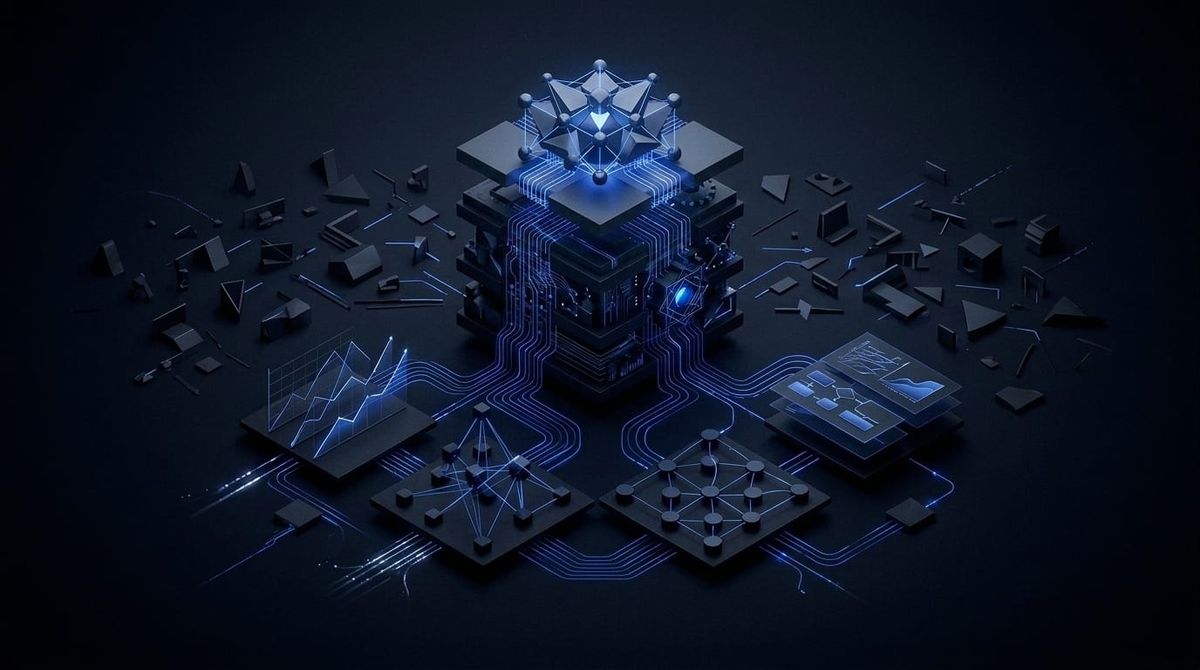
When AI actually runs your agency operations, your day stops being about doing the work and starts being about reading the work the machine already did — and making the three or four decisions it flagged for you. The system handles execution; you handle judgment.
You've read the articles. You've seen the threads. Everybody's talking about what an AI-native agency is — but nobody shows you what the day actually looks like.
Not the concept. The clock.
I run a marketing agency. The machine underneath it handles ad spend and performance across every client account, publishes content every night, monitors every client conversation, and kills bad ads before I finish my coffee. This is not hypothetical. This is Tuesday.
Here's the actual walkthrough.
What happens before you even wake up?
The machine reads everything overnight. Every ad account's spend and performance. Every client conversation — comments, messages, replies. Revenue and deal flow. Email engagement across every list. Content pipeline status.
By the time I open my laptop, all of that is compressed into one brief. Not a dashboard I have to interpret. A brief — with decisions pre-queued for one-tap approval.
I'm not logging into six platforms and squinting at graphs. I'm reading a document that says: "This ad set spent $3 and got zero clicks in 40 impressions — kill it?" and I tap yes.
That's a real decision from our own account. $3.02 total spend, same-day kill. It would have run for weeks at most agencies.
What does the first hour actually look like?
The morning brief takes about fifteen minutes to read. Most days, the decisions are small: approve a budget shift, confirm a creative kill, acknowledge a client comment that's already been flagged and drafted for response.
Some days, the brief surfaces something the system caught that I would have missed. A backup that had been silently failing for 45 days. A delivery pipeline that stopped sending product emails for 9 days while every dashboard showed green — more than a dozen buyers sitting in silence because one character was wrong in an environment variable.
The machine didn't just find those. It reported them, with the fix, in the morning brief. My job was to read and approve.
If you've been the agency owner who wakes up and immediately opens seven tabs — Ads Manager, ClickUp, Slack, email, CRM, analytics, content calendar — and spends two hours just figuring out what happened yesterday, that's the gap this closes.
How does client work get handled during the day?
Client comments surface within two hours, with alerts to the team channel. Nothing sits unanswered long enough for a client to wonder if we saw it.
The system pre-generates weekly ad plans for clients, tracked against targets, before anyone asks. For one enterprise client, we instrumented their entire marketing stack — Google Ads, CRM pipeline, behavioral analytics, project management — into a single daily intelligence feed in one working day. Their own team had been trying to build that for quarters.
The machine reads their account every morning and drafts the leadership memo before the weekly call. Client-side effort to run the account: approaching zero.
When something needs to be built — a new ad set, a creative test, a report — I don't open a blank canvas. The machine has already researched what formats are winning in the market, filtered them down to only the formats we can actually produce at quality, and queued the production. I review, adjust, approve.
Thirteen ad concepts and six finished creatives in one afternoon. For our own account. Including studying the historical winner and producing variants in its visual language. Nobody filmed anything. Nobody opened Canva.
What happens at night when you're not working?
This is the part that sounds made up until you see it running.
Every night at 9pm, the machine researches what agency owners are asking right now — the actual questions, on the actual forums. It picks the one we can answer better than anyone else, writes a post through a two-stage quality gate, generates its featured image, and publishes it. Over fifty posts in two months without a content calendar meeting ever happening.
Before bed, I tag a task. The machine does it. The task comments itself done.
The infrastructure monitors itself. If a background process dies at 2am, the morning report tells me what broke, what fixed it, and what needs me. We caught a power outage that killed five processes this way — same-day repair, zero client impact.
What decisions are actually left for you?
This is the real question behind the question. If the machine handles execution, what's left?
Three things.
Pattern-watching. The system surfaces data. You read the patterns across clients, across campaigns, across weeks. A retargeting audience that produced $108 in revenue off $17.76 in ad spend — on a 20-person audience — only meant something because a person recognized it as a signal worth scaling, not a fluke worth ignoring.
Judgment calls the system can't make. Whether to raise a client's budget. Whether to cut a creative that's performing but feels off-brand. Whether to take on a new client who looks good on paper but has a deal structure that'll eat your margins. The machine pre-packages the context. The call is yours.
Building the machine itself. Every correction you make, every kill rule you establish, every "no, do it this way" — that compounds. The system gets smarter about YOUR clients, YOUR taste, YOUR business. It reads their calls, their ads, their CRM records. Leaving throws away that asset. Staying makes it harder to replace every month it runs.
That's what makes an AI-native agency different from an agency that just uses AI tools. The tools don't compound. The machine does.
How do you get from where you are to this?
You don't learn your way here. You install your way here.
The typical agency owner spends six to twelve months buying tools, watching courses, testing prompts, and ending up with a dozen disconnected subscriptions that don't talk to each other. We built our system in about five weeks — while running accounts, while closing deals, while delivering for clients.
The difference wasn't talent. It was architecture. You don't stack tools. You install an operating system — one that compounds on your clients' data and gets harder to replace every month it runs.
The $27 playbook is the system itself. Same one running underneath everything you just read.
FAQ
Can a small agency actually run like this, or is this enterprise-level?
We're a small agency. Two founders, a small team. The machine is what lets us run accounts that would normally require a team three times our size. The system doesn't need headcount — it needs architecture.
How much does it cost to set up?
Less than most agencies spend on disconnected SaaS subscriptions in a year. The system replaces the tools, not adds to them. We're not buying ten platforms at $200/month each — we built one system that does what all of them did, on our data, compounding.
What happens on days when something goes wrong?
The system investigates and fixes it. The 9-day silent delivery failure — dashboards green, zero emails going out — was diagnosed and repaired by the system once flagged. The machine watches the machine. Bad days still happen. You just find out faster and with the fix already drafted.
Does this work for agencies in different niches?
The system runs across multiple niches right now. The architecture is the same — the data it compounds on is what's different. Each client's campaigns, their audience's behavior, their industry's patterns — that's what the machine learns. The operating system is niche-agnostic. The intelligence it builds is niche-specific.