Will the AI You Build Today Be Obsolete in Six Months?
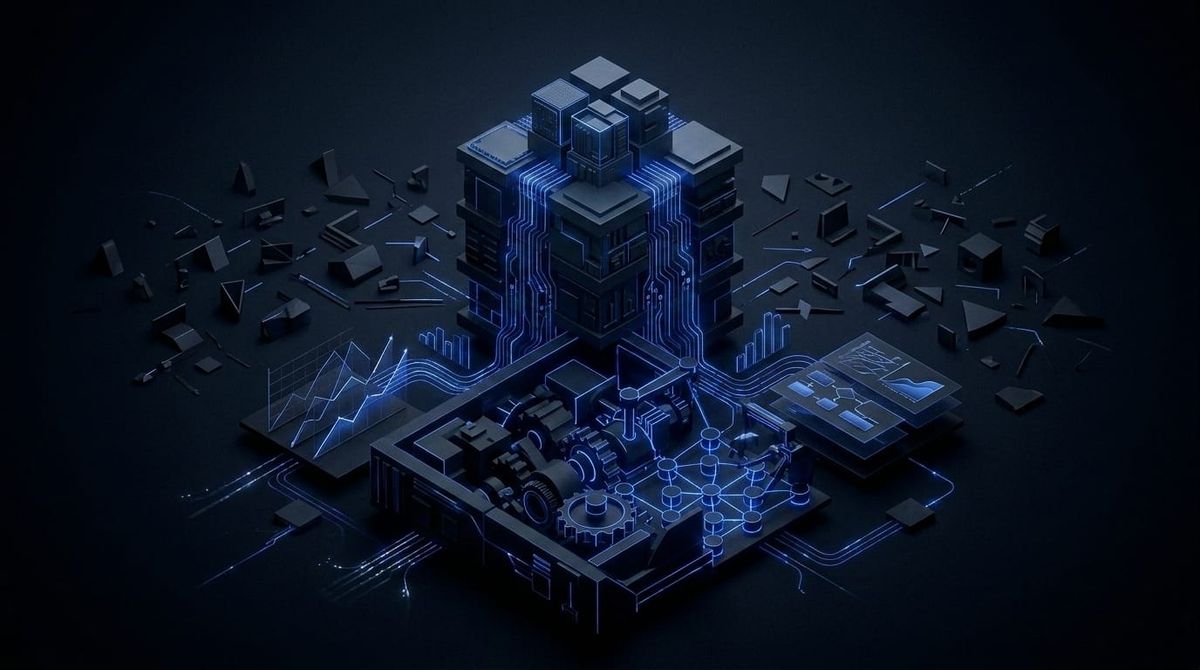
Probably not — if you're building the right thing. Models get swapped out every few months; the system you own doesn't. The data, the workflows, and the compounding intelligence you build survive every release, because they're yours — not rented from whichever model happens to be hot this quarter. The only AI that goes obsolete in six months is the AI you rented instead of built.
I get some version of this question every week, usually from another agency owner, usually phrased like a confession: "I keep meaning to go all-in on AI, but every time I look up there's a new model, a new tool, a new thing everyone says I have to switch to. So I just… wait. Why pour months into building something that'll be outdated by spring?"
I understand the fear. I've been the guy with seventeen browser tabs open, watching the ground move under my feet, thinking I'd missed the window. But the fear is built on a bad assumption — that adopting AI means betting on a model. It doesn't. And once you see why, the "it'll all change in six months" worry stops being a reason to wait and becomes the reason to start.
Why does AI feel like it'll be obsolete in six months?
Because the part of AI you read about in the headlines is obsolete in six months.
The model that was state-of-the-art in January is a footnote by July. The tool everyone swore by gets undercut by a free version. The prompt pack you bought is stale before you finish reading it. If your entire relationship with AI is "which model, which tool, which subscription," then yeah — you're on a treadmill, and the treadmill speeds up every quarter. That's exhausting, and it's expensive, and it's exactly why so many smart operators freeze.
Here's the thing nobody selling you the next tool will say out loud: the tools were never the asset. They're the engine. And engines get swapped.
What actually goes obsolete — and what doesn't
Think about what you'd actually be building if you stopped collecting tools and started building a system.
You'd be building data — your client history, your buyer list, the record of every test that won and every test that died. You'd be building workflows — the sequence of steps that turns a raw lead into a booked call, a booked call into a close, a close into a renewal. And you'd be building intelligence — the accumulated judgment of what works in your specific market, with your specific offer, that gets sharper every single week.
None of that is model-dependent. Swap the engine underneath and the data is still yours. The workflows still run. The intelligence still compounds. A new model release doesn't reset you to zero — it just makes the thing you already own run faster.
That's the whole game. You're not betting on a model. You're building an asset that every new model makes more valuable. The people who treat AI like a subscription get a new bill every quarter. The people who treat it like infrastructure get something that appreciates.
The difference between renting AI and owning a system
I was the guy AI was supposed to replace. I built the machine instead — and I still own the agency. The reason that worked isn't that I picked the right model. It's that I stopped renting and started owning.
A rented stack looks like this: a chatbot bolted onto the website, a prompt pack in a Google Doc, three overlapping subscriptions you barely use, and a low-grade dread every time a competitor mentions a tool you've never heard of. Nothing connects. Nothing compounds. And every release cycle, you feel a little further behind — because you are, by design. Renting keeps you permanently one model behind whoever owns.
An owned system looks like this: the work runs on files and workflows you control, the data accumulates in one place, and the thing gets smarter on its own schedule regardless of what gets announced this week. When something better comes along, you don't rip and replace — you slot it in underneath and keep moving.
I'll be honest about my own machine, because it's the cleanest proof I have. The system that runs my agency has been rebuilt under the hood more than once this year. New engines, better parts, the kind of upgrades the "it changes too fast" crowd panics about. You know what happened to the work during those swaps? Nothing. It never went dark. The morning reports kept landing, the ads kept running, the posts kept publishing. Because the machine was never the model. The model was just the part that's easy to replace.
What "model-agnostic" looks like in real numbers
I don't ask anyone to take this on faith. We run what we sell, and we keep the game tape.
Our own front-end funnel has been live and compounding for months: 54 buyers, $3,069, a 31% repurchase rate — small numbers, but every dollar ours and every dollar tracked. The retargeting audience feeding it converted at an $8.88 cost per acquisition at 3.04x return, off a pool of real buyers we built and own. When the tracking started leaking and that audience looked like it was shrinking, we didn't go buy a new tool — we rebuilt the data layer ourselves in an afternoon and watched it grow back overnight. The audience is the asset. The tool that measured it was optional.
That same system has killed a dead ad at $3.02 — forty impressions, zero clicks, gone — before a normal shop would've finished its first coffee. It once cost us $300 over three days to learn a hard lesson about a platform's algorithm, and that lesson is now a permanent rule the system enforces forever. That's the compounding I keep talking about: a mistake we paid for once becomes intelligence we never lose. None of it cares which model is underneath. The judgment lives in the system, not the engine.
Zoom out and the pattern holds across everything we've touched — millions in ad spend managed, 2,700+ booked calls generated, one partner taken from $1,500 a month in boosted posts to $105K in a single month. The models we used at the start of that work aren't the models we use now. The results didn't expire when the models did. The system carried them across.
So should you wait until the dust settles?
No — because the dust isn't going to settle. There's no version of the next two years where AI stops changing and you get a calm window to "finally do it right." Waiting for stability is waiting for a thing that isn't coming.
But here's the part that should actually relax you: you don't need stability. If what you build is model-agnostic — owned data, owned workflows, compounding intelligence — then the constant change works for you. Every release upgrades your machine for free. The operators who win the next two years aren't the ones who picked the perfect model. They're the ones who started building the asset early enough that six models from now, they're six models deep into compounding while everyone who waited is still on the starting line, still comparing tools, still afraid to commit.
The volatility you're scared of is only dangerous to renters. To owners, it's a tailwind.
If you want to see what the owned version actually looks like — the exact system, not another course about it — the whole thing is laid out in the $27 playbook. It's the same machine logic we run on our own account, written down so you can build the part that doesn't go obsolete. Start with what an AI-native agency actually is, then look at where to actually start — and notice that neither one is a list of tools.
Frequently asked questions
Should I wait to invest in AI until things slow down?
No. Things aren't going to slow down. Waiting only makes sense if you're buying a tool, because tools expire. If you're building a system — owned data, workflows, and intelligence — the constant change upgrades what you own instead of obsoleting it. The cost of waiting is that you don't start compounding.
Won't whatever I build now be outdated when the next model drops?
The model layer will be outdated, sure. The model is the easiest part to replace. What you build on top — your client data, your processes, the record of what works in your market — doesn't reset when a new model ships. A model release makes a well-built system faster, not obsolete.
What does "model-agnostic" actually mean for a small agency?
It means the value isn't trapped inside any one tool. Your workflows and your data live in files and systems you control, so you can swap the engine underneath without losing the work. Practically: when something better comes out, you slot it in and keep going, instead of starting over.
Is it cheaper to just keep using tools as they come out?
It feels cheaper because each subscription is small. But renting keeps you permanently one model behind, paying forever and owning nothing. Building an owned system costs more attention up front and then appreciates — the opposite of a subscription that resets every quarter.
How do I start building something that won't be obsolete?
Stop collecting tools and start connecting one workflow end to end — lead in, system runs it, outcome tracked, lesson kept. Own the data and the process. The model you use to run it can change a hundred times; the asset you're building only gets more valuable each time it does.
I document how a real agency actually runs on an AI system — real campaigns, real spend, real numbers, updated as it happens.
I document how a real agency actually runs on an AI system — real campaigns, real spend, real numbers, updated as it happens.